
Before January 2025, life looked very different. Yvonne and I were in the middle of moving from a tiny, remote island off the west coast of Scotland to an abandoned farm in the middle of nowhere on mainland Scotland. We were in that awkward half-life between two places, where you are no longer fully in one world but have not quite arrived in the next.
We still had things tied to the island: familiar routines, practical bits of life that did not seem urgent until they became urgent. Most of our attention was on the farm.
The farm had been abandoned for thirty-five years. There was no liveable house, so we were staying in a static caravan in part of the farm’s forest. The place sat on top of a hill in the middle of nowhere, exposed to weather and silence.
Over time we had managed to buy some of the land around us, until we had about eighty-five acres. There were sheep, Highland cows, old fences, broken buildings, mud, wind, tools, and a thousand jobs waiting behind every finished one.

It wasn’t easy, but it was living. I liked that.
I liked the work, even when it was slow. I liked learning skills I had never needed before. I liked the stubborn optimism of looking at a place most people would have dismissed and believing it could be brought back.
To keep a record of it, I started a small YouTube channel called Simple Life Scotland. We were trying to build a different kind of life. Simpler, at least in theory. More self-reliant. More connected to weather, animals, work, consequence.
At the time, I thought that was the harder path. The farm, the isolation,
the labour, the uncertainty, the long slow work of making a place habitable again. I thought I had chosen the difficult thing.
I had no idea what was coming.
I thought I had a cold. That is the part I keep coming back to. Not the helicopter to hospital. Not the doctors surrounding me in hospital. Not being sent home to die. The cold. Because that is how quietly the line can move between ordinary life and something else entirely. Sometimes it comes disguised as something you already understand.
It was early December 2024. When I began getting short of breath, I blamed the cold. Colds last a week or two, I told myself. Honey and lemon. Rest when the work is done. Keep going.
But it didn’t pass. By Christmas morning, Yvonne and I were away for a short break. We walked in the hotel grounds and I felt terrible. The walk was hard in a way I could not explain, so I explained it away: the cold, the extra weight I’d put on over the last 5 years, the farm, the time of year.
Neither of us fully noticed how much time was passing without improvement. But I was getting worse.
In early January, I went to my first meeting as chairperson of the local NFU branch. The room was upstairs and I remember looking at the staircase feeling something I did not understand. Fear. Not annoyance or tiredness, pure fear. My body knew before I did.
I had to ask someone to help me up to the meeting room. Not the best start to my first meeting as chair. And halfway through I got worse, I could not focus. So, I made my apologies, and Yvonne and I went back to the farm. But, still, I didn’t seek help.
By then, sleeping had become almost impossible. First, I could not lie on my back. Then I could only sleep sitting up. Eventually I had to kneel on the floor, lean forward, and rest my head on a chair just to get a few minutes.
It sounds absurd now. But, at the time, it’d become part of the world I was trying to normalise. My focus was rebuilding our farm and keeping our sheep and highland cows healthy.
A few days later everything became unbearable and because my GP was back on the island, Yvonne found a GP about an hour away I could pay to see. I was sure I just needed tablets of some sort and all would be fine. But the GP knew something far more seriously was wrong. My body was swollen. Walking a few steps was almost impossible. An ECG showed an irregular heartbeat.
Later, a doctor told me they thought I would have died within days if I had continued ignoring it.
Rush to the local hospital I was told I had heart failure, atrial fibrillation and dangerously high blood pressure. I was stabilised, then sent back to the island with medication and not much guidance. I still did not understand how serious things were.
As soon as we landed on the island, I went to see my GP. I have never seen a doctor look as worried as she did. “Have you been put on the heart transplant list?” That was when the severity first began to land.
After a few days on the island, I went back to the GP because heart felt odd. Imagine an ink drop being dropped into a pool of water, spreading out. That was how my heart felt.
Glasgow hospital was called. A helicopter was sent.

When the Coastguard air ambulance was waiting at the airport, it finally felt serious. Even then, I was still trying not to make a fuss. I would not let them lift me in. I crawled from the gurney onto the floor of the helicopter.
The door slid shut. The blades started. The noise filled everything. I lay there looking at the cream-coloured ceiling, thinking it was a shame I could not see the view.
In Glasgow, scans confirmed dilated cardiomyopathy. My heart had become enlarged and weakened. My ejection fraction was 23% and falling. I was full of fluid. Breathing was difficult. One cardiologist gave me the truth. My heart will most likely continue to deteriorate. I might not get beyond the year. Or a clot could end it sooner.
His honesty gave me comfort. Not because the news was good. Because uncertainty was worse.
In the third week at the hospital, I had a cardioversion. When I woke up, the first thing I asked was, “Did it work?” Yvonne looked at me and said, “Yes.” For weeks, my heart had been a strange, restless squiggle. Now the line on the monitor looked ordered. Almost calm.
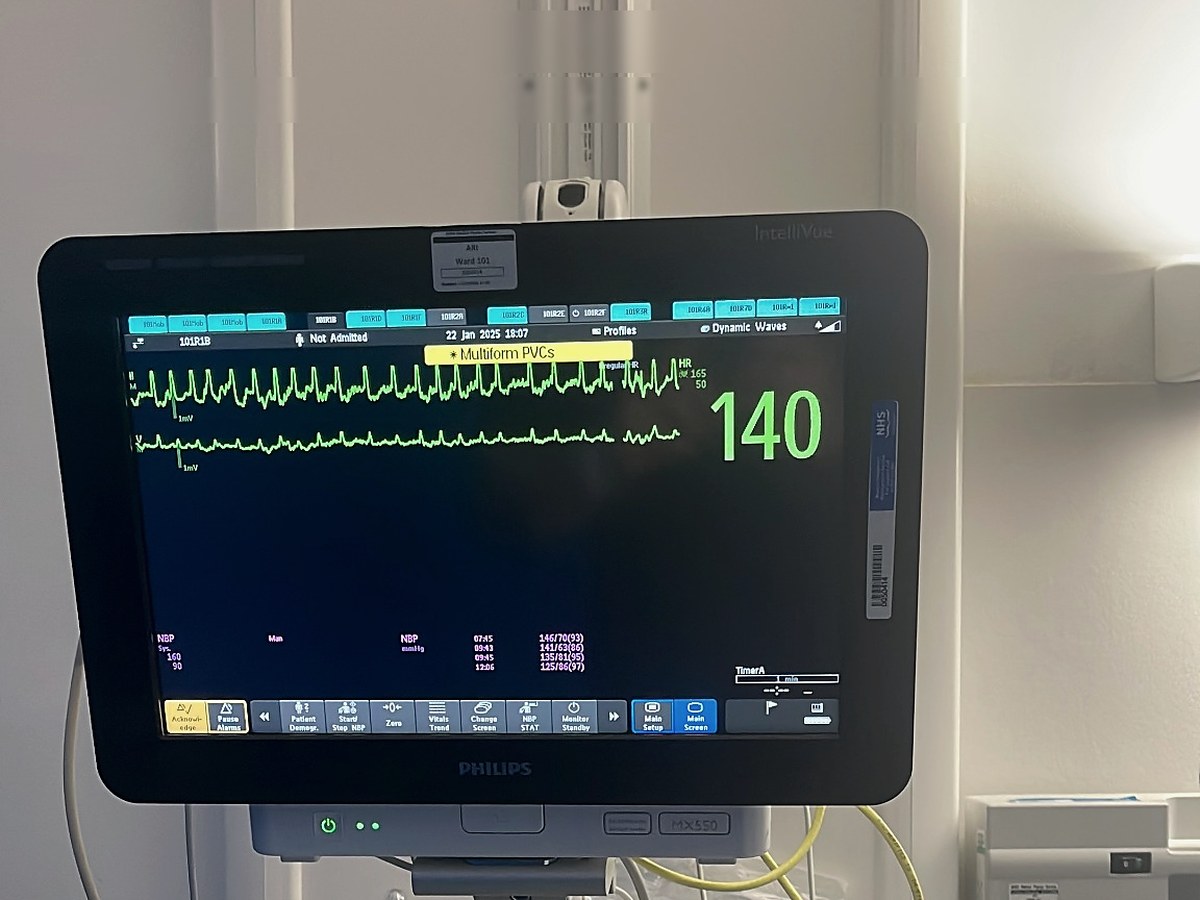
I was still very ill. But something inside me had found rhythm. A few days later, I was told I could go home. At discharge, I asked questions that must have sounded absurd. Can I go walking? When can I start running? Can I walk up hills?
Blank faces. “Just take it easy.”
I thought that meant caution. Only later did I understand the cardiology team had a very different view of what was likely to happen. I think that naivety saved my life.
Leaving the ward felt stranger than arriving. I had a bag full of medication and almost no strength. I left in a wheelchair, with Yvonne pushing me towards ordinary life.
We did not return to the farm. We went back to the island. For the first week or two, I lived mostly on the sofa. Walking to the kitchen was exhausting. The stairs seemed like something from another life so I didn’t go near them.
The house looked out over the beach. Across the road were the dunes. Beyond them, the sea. At first, that was all I wanted: to get across the road, stand on the dunes, and look at the water.

After a couple of weeks, I knew I had to move. I did not know whether it would help or whether I was being sensible or stupid. But I knew this: if I did nothing, I would die.
The harder path is rarely dramatic at the beginning. Sometimes it is one painful step, repeated until your life changes shape.
Sometimes it is one painful step, repeated until your life changes shape.
I remember the first day I tried to walk further than the bathroom, which was no more than 20ft from my new home the sofa. It was midday on 9 March 2025. A clear, breezy day on the island. Chilly, but fresh. The Atlantic was doing what it does there, pushing itself into everything: the air, the grass, the lungs, the bones.
I did not tell anyone I was going to try. There was no announcement. No heroic speech. No declaration that this was the beginning of recovery. At the time, I am not sure I thought of it as recovery at all. It was simply the next thing in front of me.
There was the front door. There was Yvonne beside me. There was a wall I could lean on. And there was the beach across the road.
I remember the sound of the door handle, the clunk and squeak of it as it opened. I remember the breeze catching the door and pulling at it. The smell of the Atlantic hitting my face, cold and clean, and the first sharp breath of it landing in my chest. I could hear the sea folding over itself on the sand. I could hear the marram grass moving in the wind.
I used the wall and held onto Yvonne as we made our way outside. I tried not to think about the steps. I tried to notice everything else. The sea, The air, The grass, The sand. The fact that I was outside at all.
What surprised me was that it was not my legs that hurt first. Not my feet. Not even my heart. It was my back.
Every time I moved my arms, pain went through me as if someone had pushed a blade into shoulder. Every few steps I had to stop and lean on Yvonne until it eased enough to move again.
After about ten minutes, I felt a strange pain in my chest. My mind went where minds go when they have been given bad news. I had to fight it back. I had a watch on my wrist, and I kept checking it, watching my pulse, watching the numbers, trying to reassure myself that I could still see what my body was doing.
There was no rush, just one step then another.

We probably walked five hundred metres. It took nearly an hour. We stopped constantly. Rested. Waited. Started again. By the time I got back through the front door, the relief was overwhelming. I had no choice I slept for the rest of the day.
But I knew something then. Not fully. Not in words. But somewhere in me I understood it. This was what had to be done. Every day. Without fail.
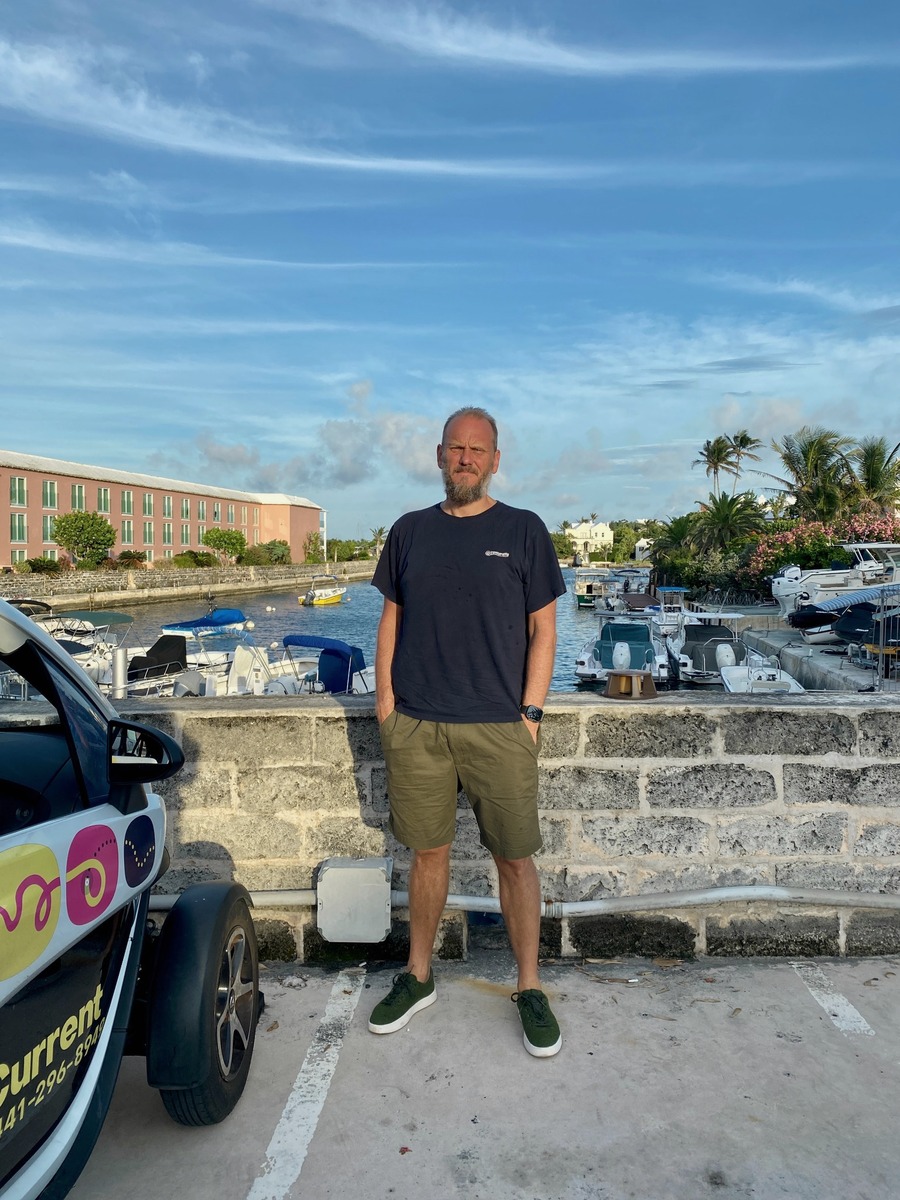
Today 16 months later I sit here typing this with what the cardiology team now call a normal heart. I train 6 days a week for at least an hour. Some days I run for two hours other days I lift heavy weights. I cycle, swim and I’ve lost 33kg in weight. I’ve never been fitter or healthier in my adult life.
I talk in detail about how my cardiac rehab team and cardiologist helped me achieve this in ‘The Harder Path’ Dispatch emailed out once a week.
More on the road back.
Read how others have overcome adversity, subscribe to The Harder Path Dispatch, emailed once a week.
Join The DispatchThis is one person’s lived experience, not medical advice. Every heart journey is different. Always follow the guidance of your cardiologist, cardiac team, GP or qualified medical professional before making decisions about medication, exercise, treatment or lifestyle changes.